

Step 1: Select Machine Type
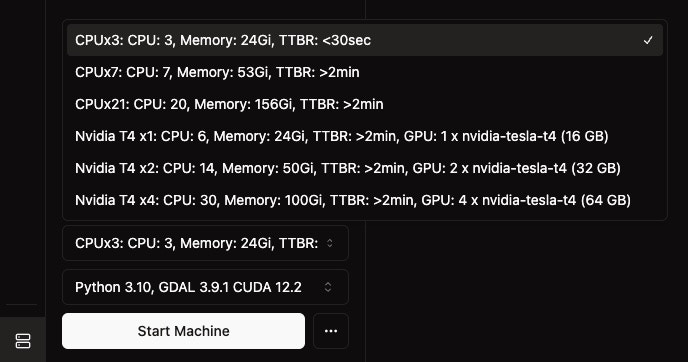
Available Configurations
Choose from these pre-configured options:CPU Machines
GPU Machines
Step 2: Start Your Machine
Quick Start
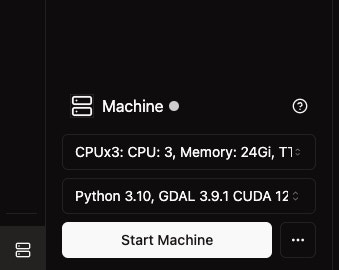
- Select Configuration: Choose your desired machine type from the dropdown
- Click “Start Machine”: Click the prominent white button
- Wait for Ready: Machine will be ready in 15-40 seconds depending on type
Start Times
- CPUx3: Under 30 seconds (fastest)
- All other machines: Over 2 minutes (varies by availability)
Step 3: Monitor Machine Status
Status Indicators
Your machine status is shown as a colored indicator dot in the machine panel and the bottom-left icon. The color reflects the current state:Green — Accessible
Machine is running and ready to execute code.
Machine is running and ready to execute code.
Orange — Starting
Machine is being provisioned. Applies to Pending, Running (container starting), and Succeeded states. Wait for it to turn green.
Machine is being provisioned. Applies to Pending, Running (container starting), and Succeeded states. Wait for it to turn green.
Red — Error
Something went wrong. This covers:
Something went wrong. This covers:
- Failed — the machine crashed or encountered an error.
- Unavailable — the required cloud compute resources could not be provisioned after multiple auto-retries on NikaPlanet’s backend. It could be due to overwhelming demand for this machine type by all cloud users. You will have to wait for the supply to increased by cloud service provider.
Grey — Terminated
Machine is stopped. No compute charges apply.
Machine is stopped. No compute charges apply.
Viewing Status
Method 1: Machine Panel
- Hover over the indicator dot: Shows detailed status information
- View metrics: Uptime, CPU usage, memory usage
- Real-time updates: Status updates automatically every 10 seconds
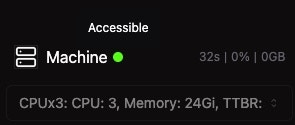
Method 2: Bottom Left Icon
- Hover over machine icon: Quick status overview
- Visual indicator: Colored dot matches the states above
- Easy access: Always visible in workspace

Step 4: Stop Machine
Stop Process
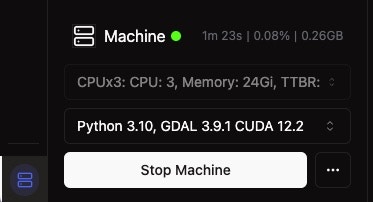
- Click “Stop Machine”: Click the white button in machine panel
- Immediate Stop: Machine stops running immediately
- No Compute Cost: No charges after stopping
Benefits of Stopping
- Save Resources: Stop when not actively using
- Cost Control: No charges when stopped
- Quick Restart: Can restart anytime needed
Best Practices
Machine Selection
- Start Small: Begin with CPUx3 for simple analysis
- Scale Up: Upgrade to larger machines for complex tasks
- GPU for ML: Use GPU machines for machine learning workloads
- Cost Consideration: Larger machines consume more resources
Resource Management
- Stop When Done: Stop machines when not actively working
- Monitor Usage: Check status regularly
- Plan Sessions: Start machines when ready to work
Next Steps
Now that your machine is running:- Start Coding: Begin your analysis in the notebook
- Load Data: Access your workspace files
- Use GPU: Leverage GPU acceleration if available
- Monitor Performance: Keep an eye on resource usage